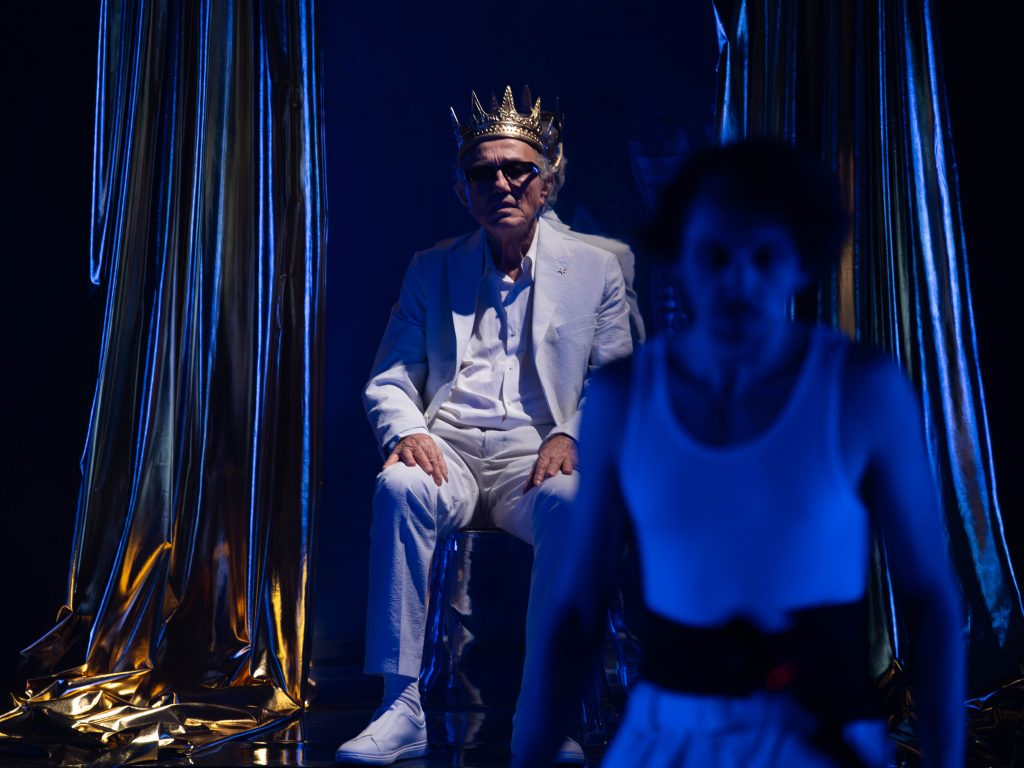
Macbeth.0
by Catinca Drăgănescu

About the show
What can a Macbeth still say today, in a world where power is no longer won on the battlefield, but in data networks? The show offers a radical rereading of the tragedy, as an algorithmic thriller in which the characters become the subjects of an experiment in political and aesthetic obedience.
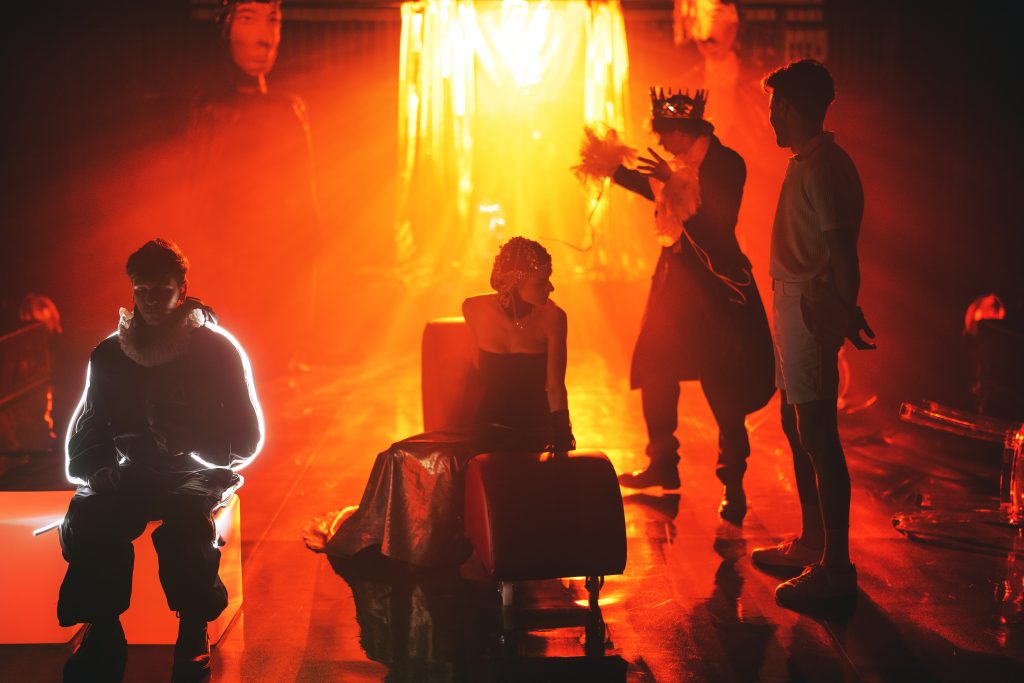
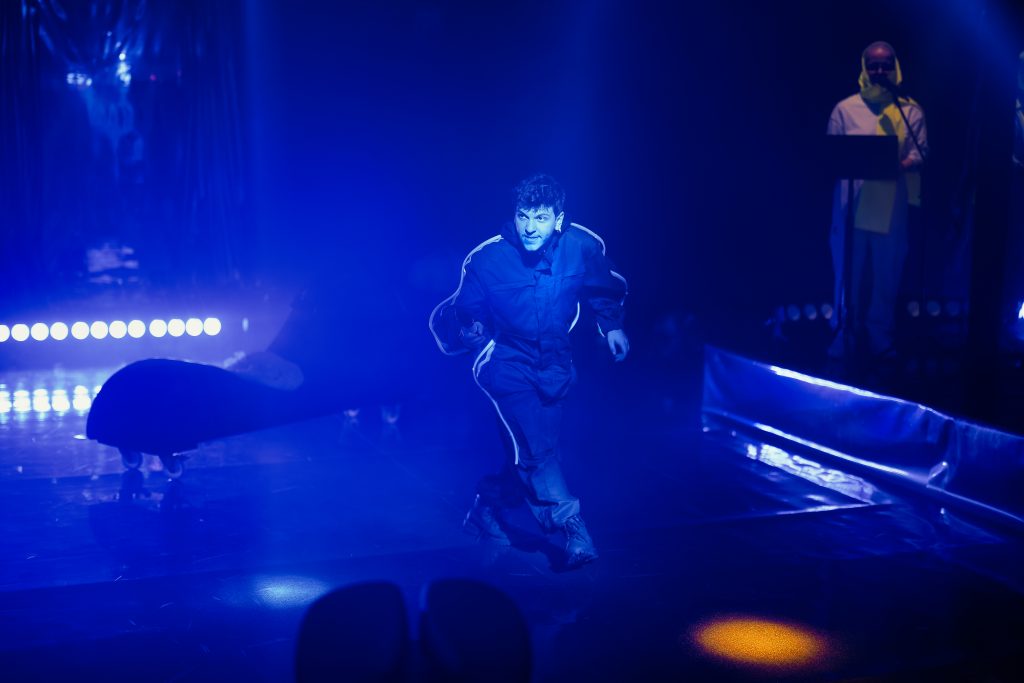
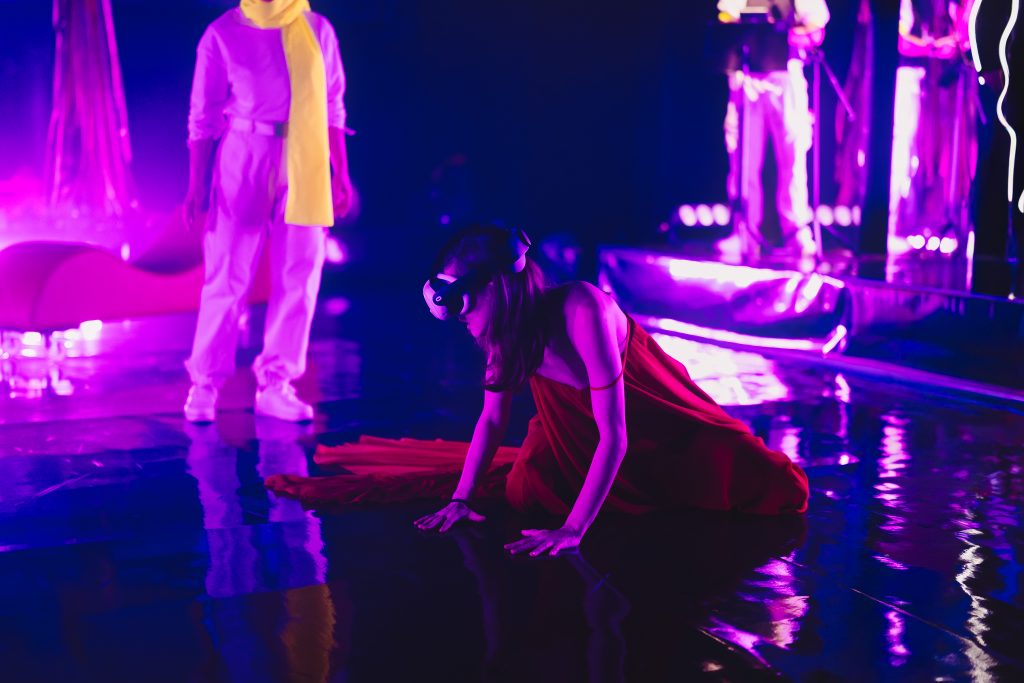
Using alternative theatre conventions, video layering, a performative chorus, and linguistic overlays, this production creates an immersive, critical experience of our hyper-mediated present. At its center: a fragile leader, tested not for what he can build, but for how much he can be manipulated. But what’s being tested isn’t just one character’s obedience. It’s ours.
Macbeth becomes Woyzeck. Shakespeare—a source code. And theatre—an interface between memory and simulation, between free will and programmed obedience. A necessary rereading, at a moment when the spectacle of the world risks becoming our only reality.
MACBETH.0
12+
Credits
Direction, concept and text adaptation: Catinca Drăgănescu
Set design: Gabi Albu
Costumes: Rodica Neacșea
VR: Ciprian Făcăeru (Augmented Space Agency)
Lighting design: Andrei Ignat
Video design: Dan Ionescu
Sound design: Andrei Raicu and Horia Constantinescu
Oversized masks and puppets creation: Laura Duică
Cast
Voicu Aaniței, Măriuca Bosnea, Mara Bugarin, Mara Căruțașu, Alina Crăiță, Sorin Dinculescu, David Drugaru, Laura Duică, Valentin Mihalache, Anamaria Pîslaru, Vladimir Purdel, Dragoș Stoica
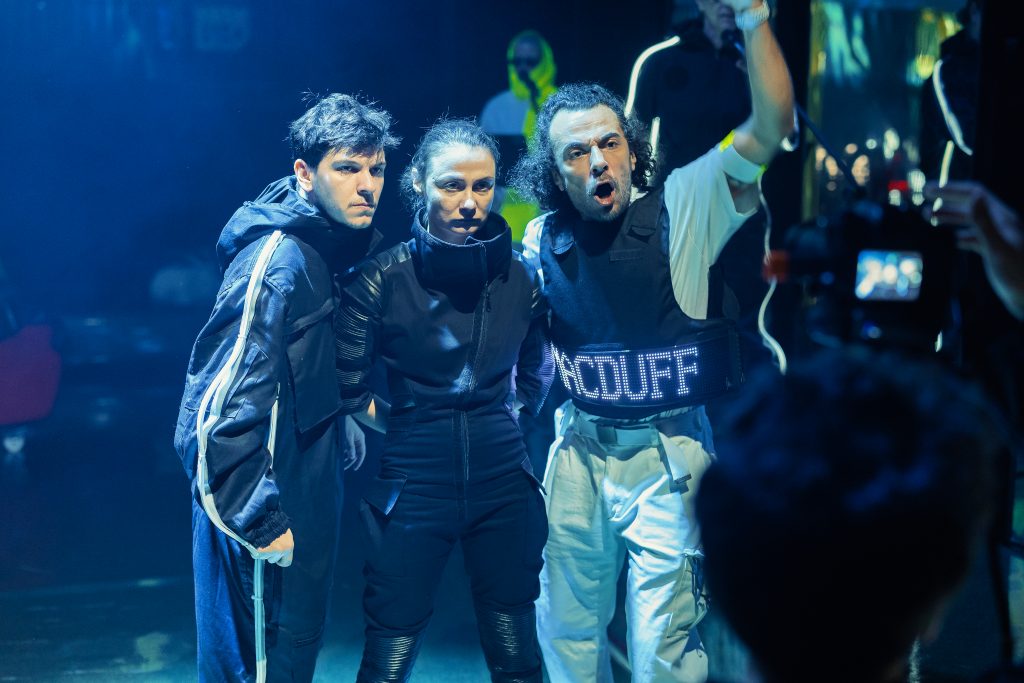
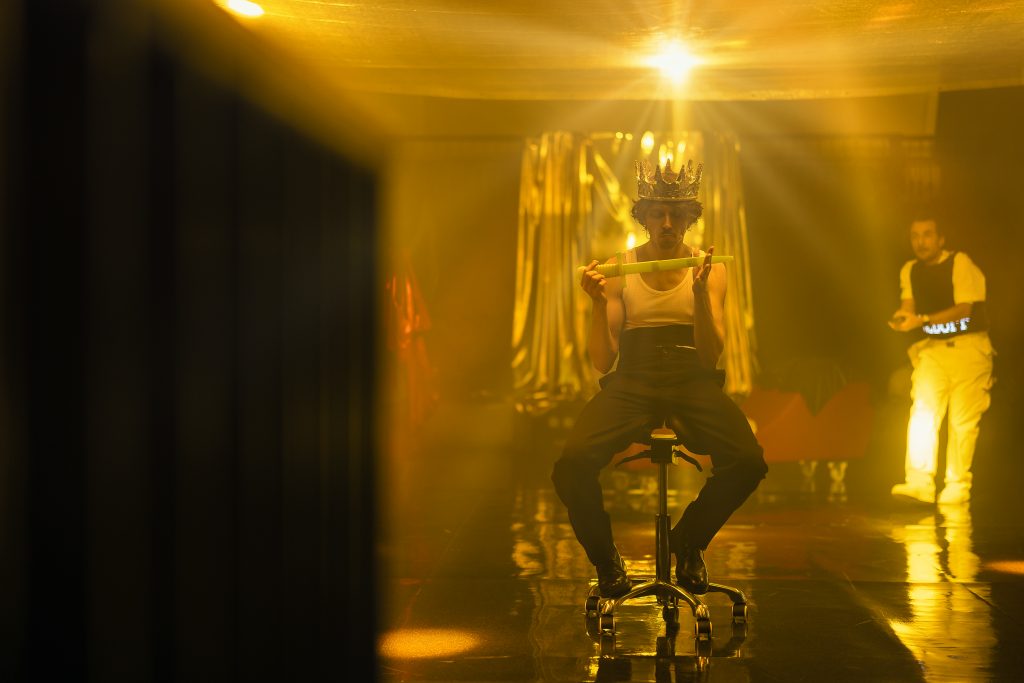
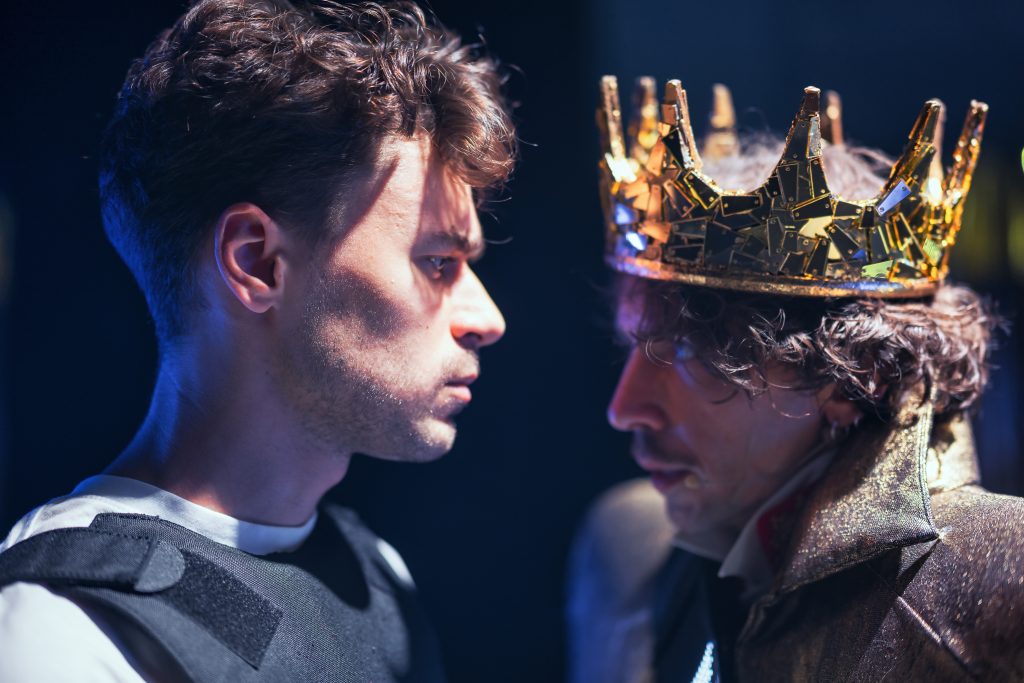
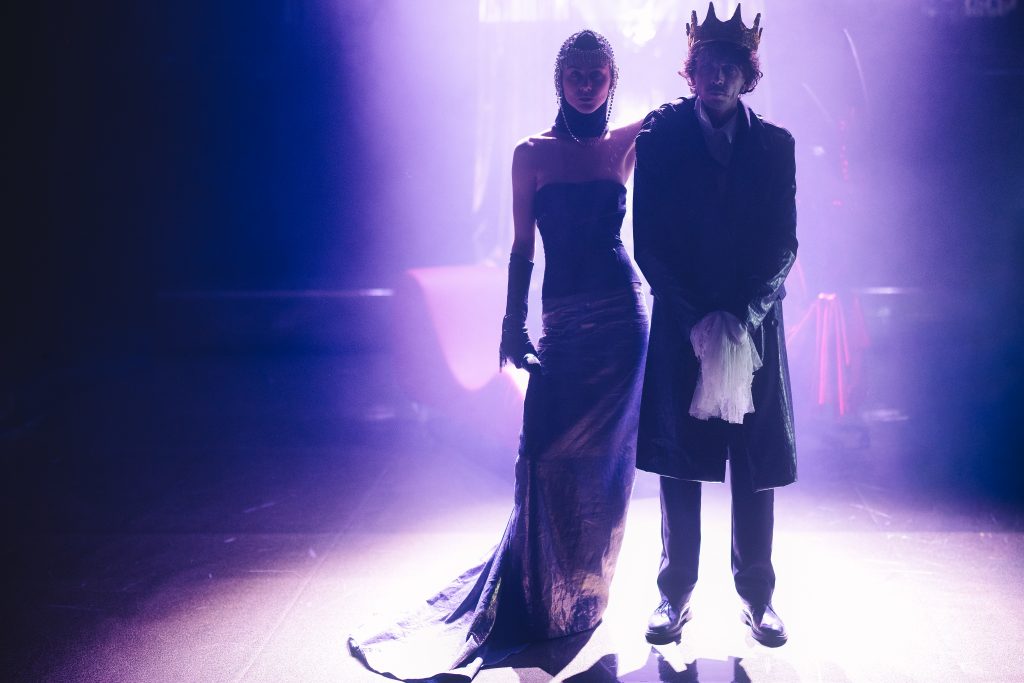
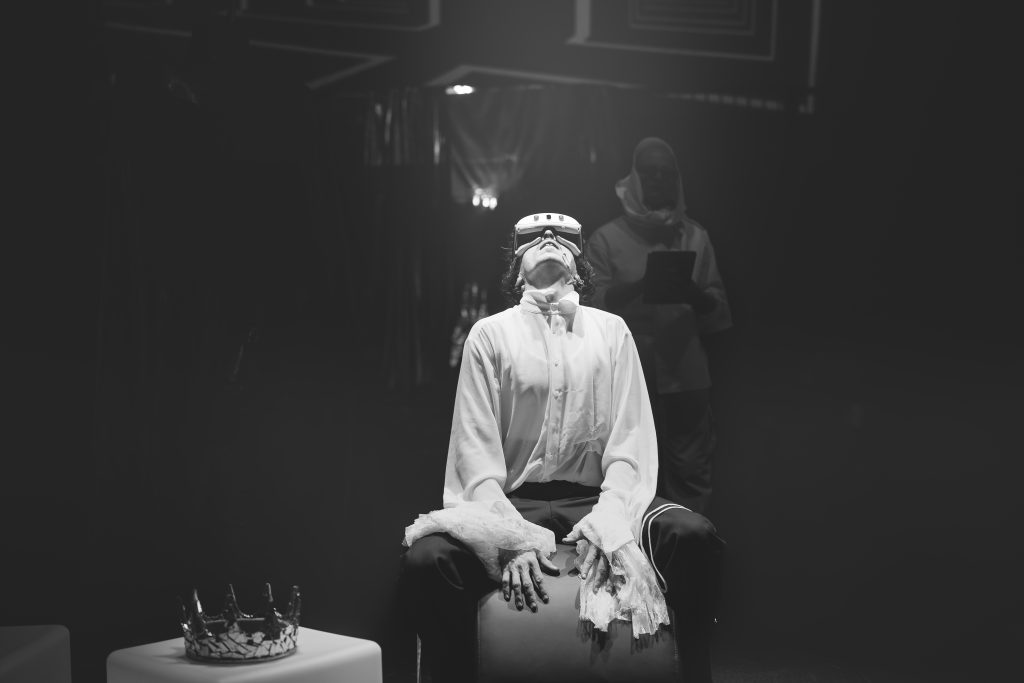
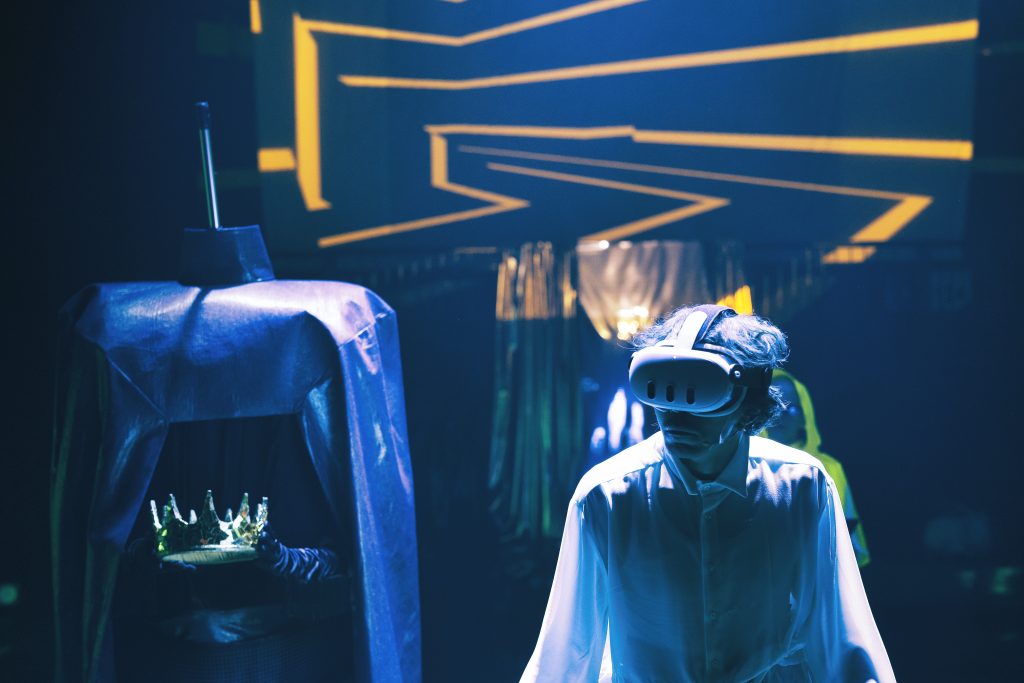
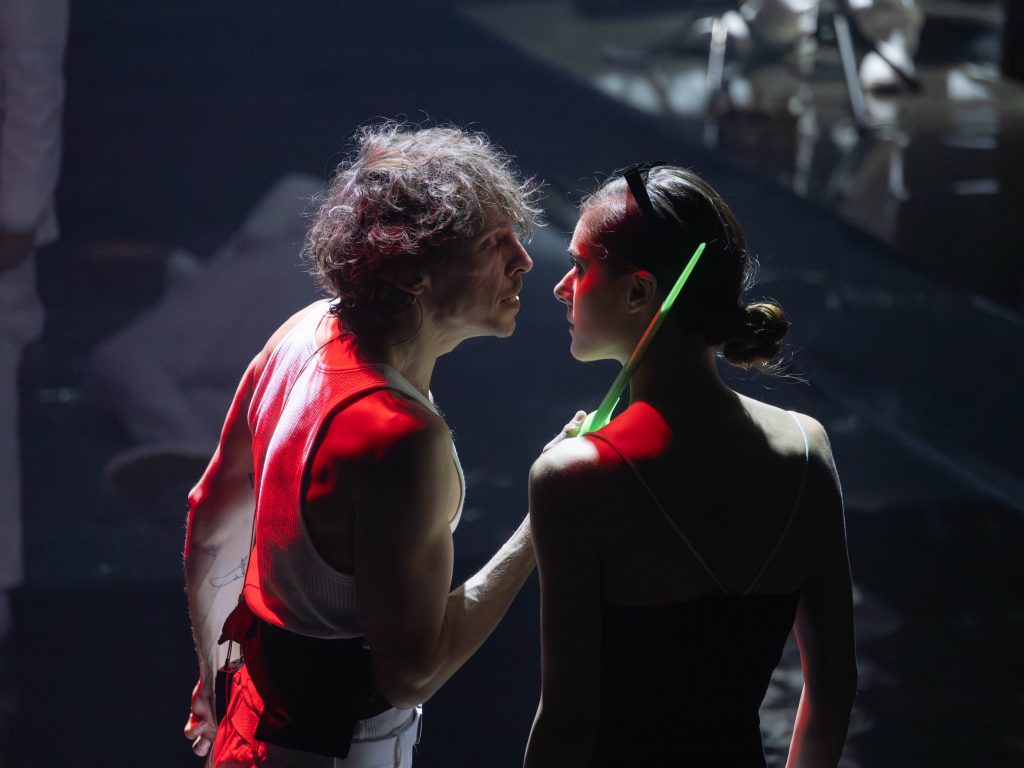
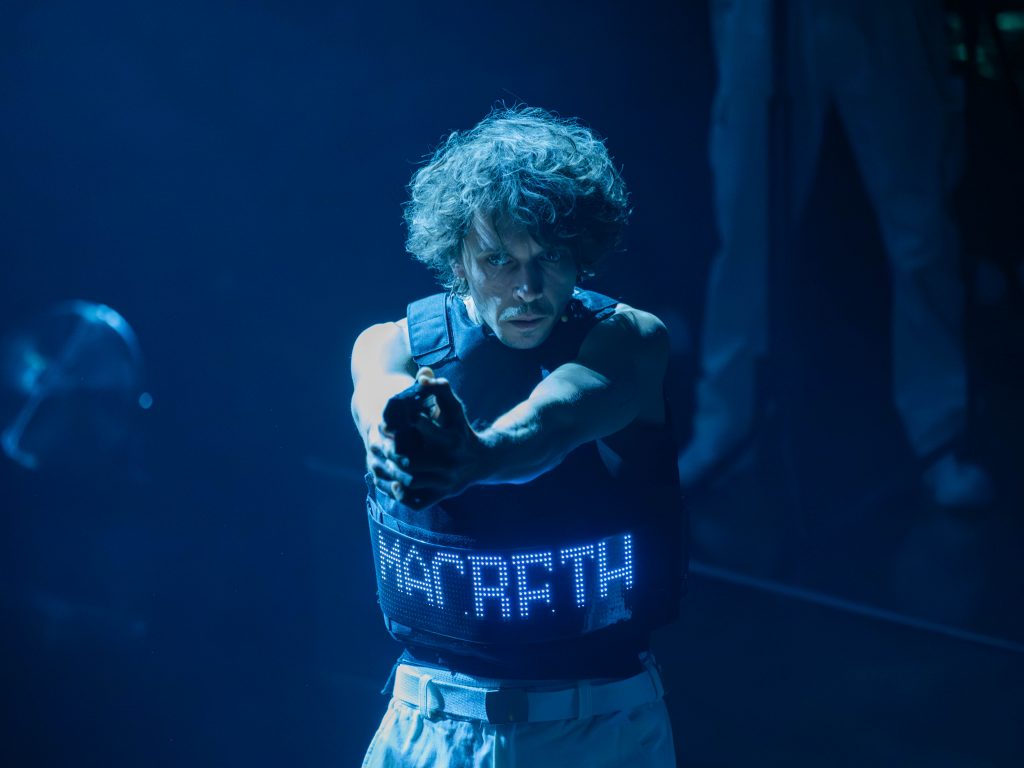
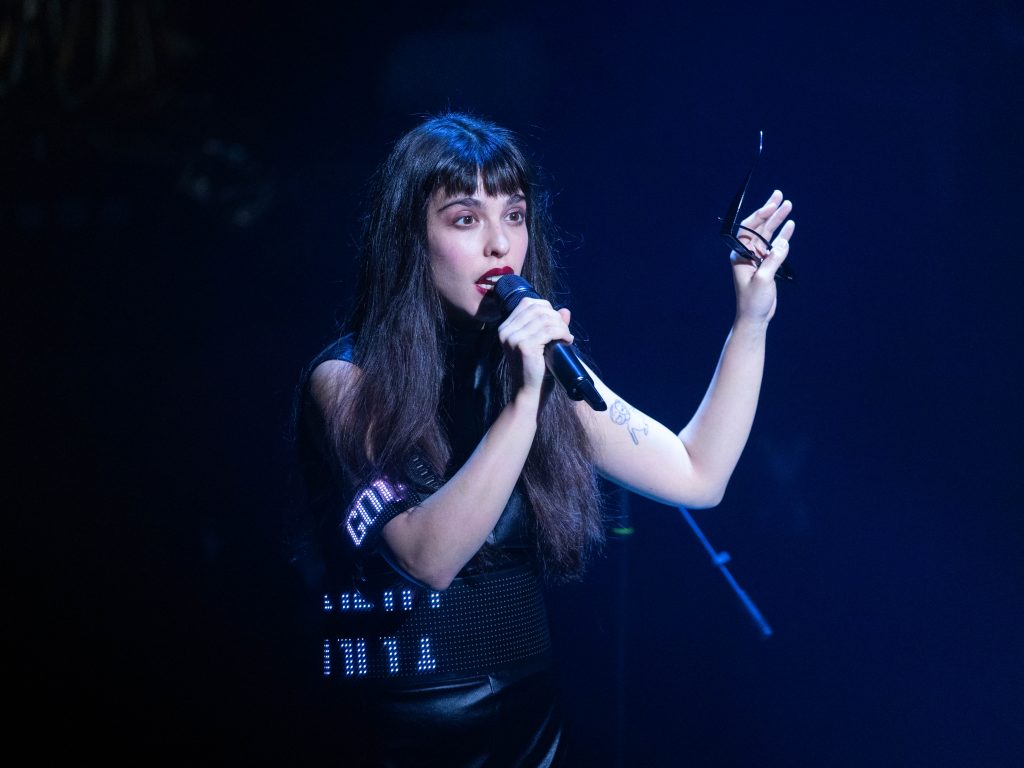
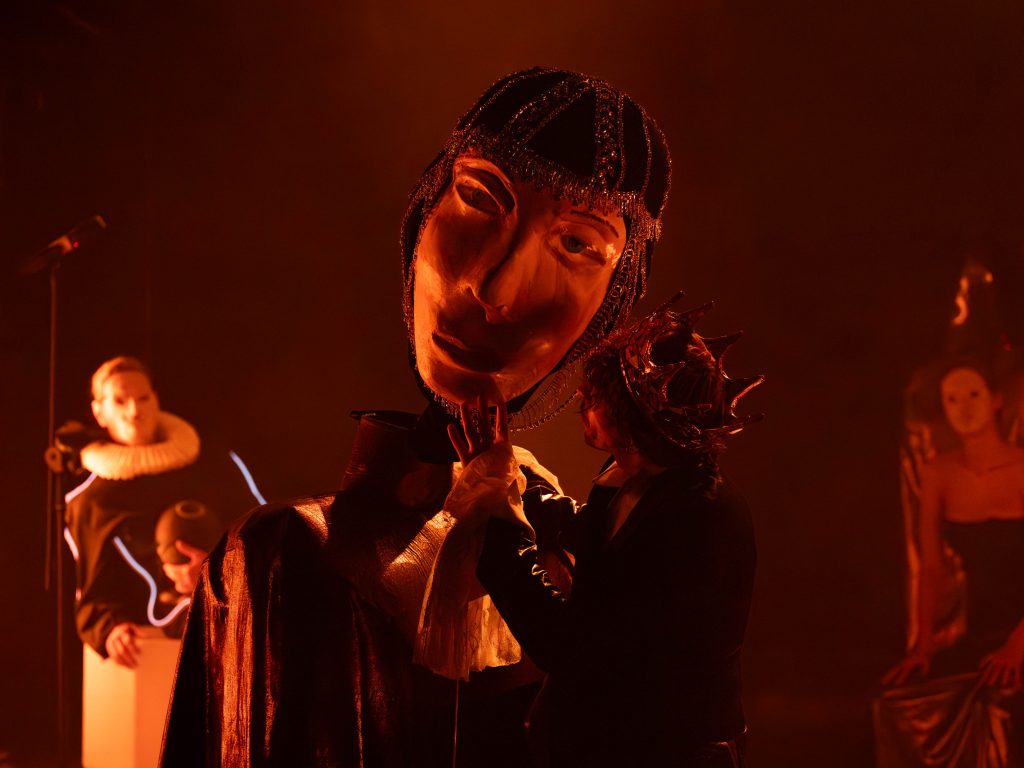
Catinca Drăgănescu concretely links cyber manipulation to the rise of autocracies, yet even for her, AI and armies of bots and trolls are only tools for controlling the world, wielded by the human factor. Macbeth is an ordinary man, a Vali Ionescu, a Dudard, a Jean. He is not a Berenger, because he has already fallen under the fascination of the virtual—something Berenger in Massaci’s show resists. Macbeth gains power, but he doesn’t possess it; he is only its interface. Behind him is the unseen force that brought him into a dominant position and controls him. Macbeth has only the insignia of power—the armbands scrolling his name, the augmented projections of the ego (the oversized puppets representing him and Lady Macbeth / Măriuca Brosnea after the coronation). Who controls power ? (Oana Stoica, AI, AI dystopia. Three shows about Artificial Intelligence / The power behind power )
“Macbeth.0” at Masca Theatre is interesting in the way it manages to turn the classic tragedy into a contemporary mirror. The whole story about ambition, guilt, and delirium suddenly becomes an investigation into algorithms, manipulation, and the illusion of choice—as if Macbeth himself were caught in a system bigger than him, a protocol running him like an experiment .(…)
The whole show works like a manifesto: Masca seems to have put its own identity on stage—their courage, their distinctive aesthetic, their taste for physicality and strong visual forms. It’s clear it’s an important project for the troupe, because they all perform, with the energy of “let’s show what we can do.” .(…)
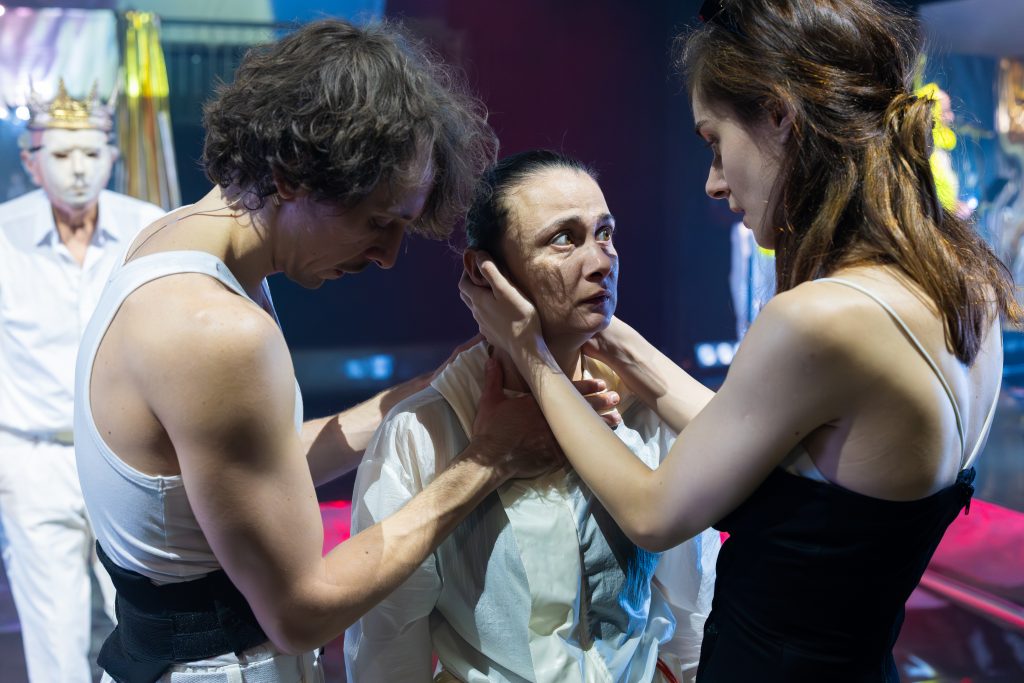
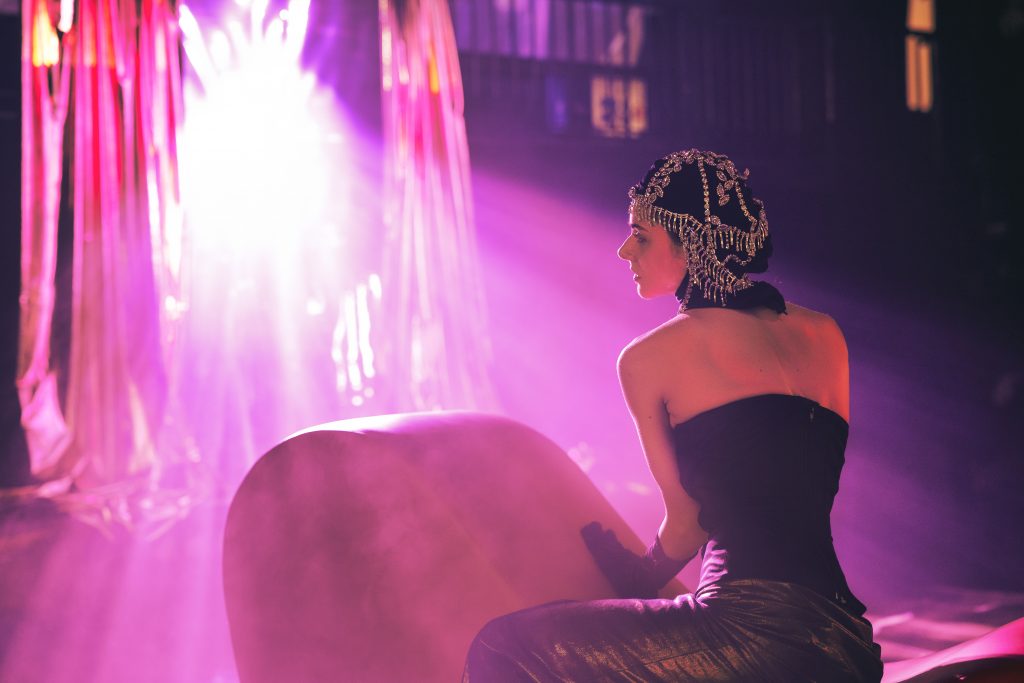
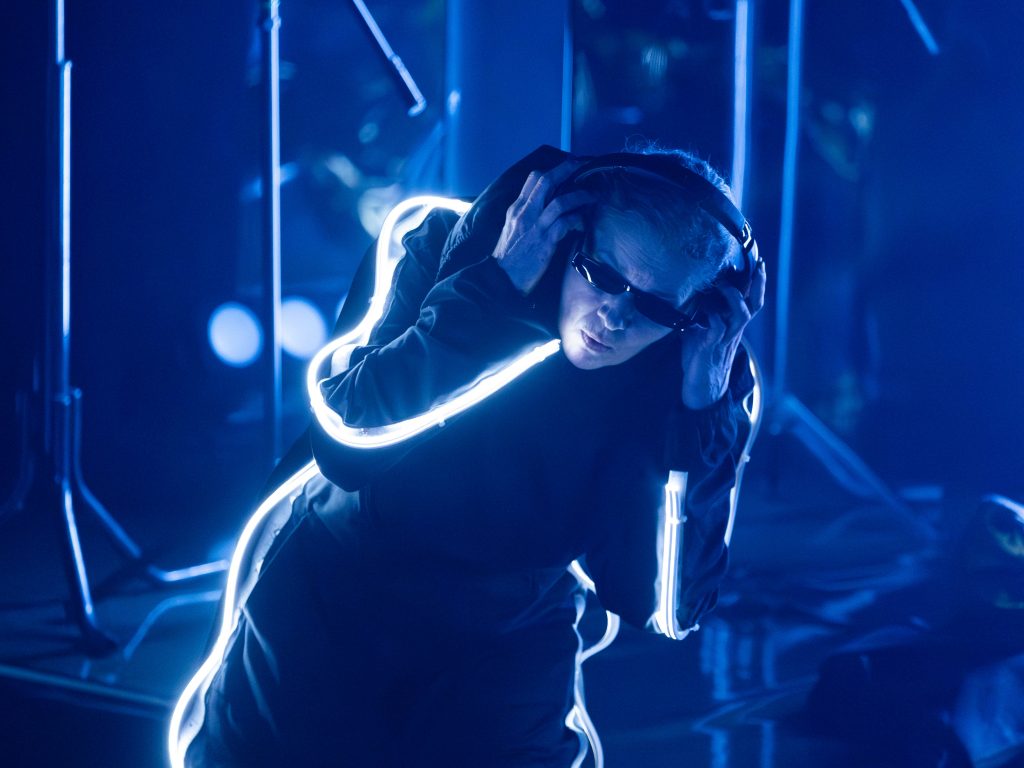
The aesthetic is dense; the video layers, huge masks, and distorted puppets create a space where you feel reality is constantly doubling, that there’s always a parallel plane slipping away from you. It gave me the feeling of an augmented world going off the rails—not in a superficial sci-fi sense, but in the sense that every gesture is tracked, recorded, interpreted by an invisible mechanis m (Marius Tudose, Macbet.o and algorithmic destiny)
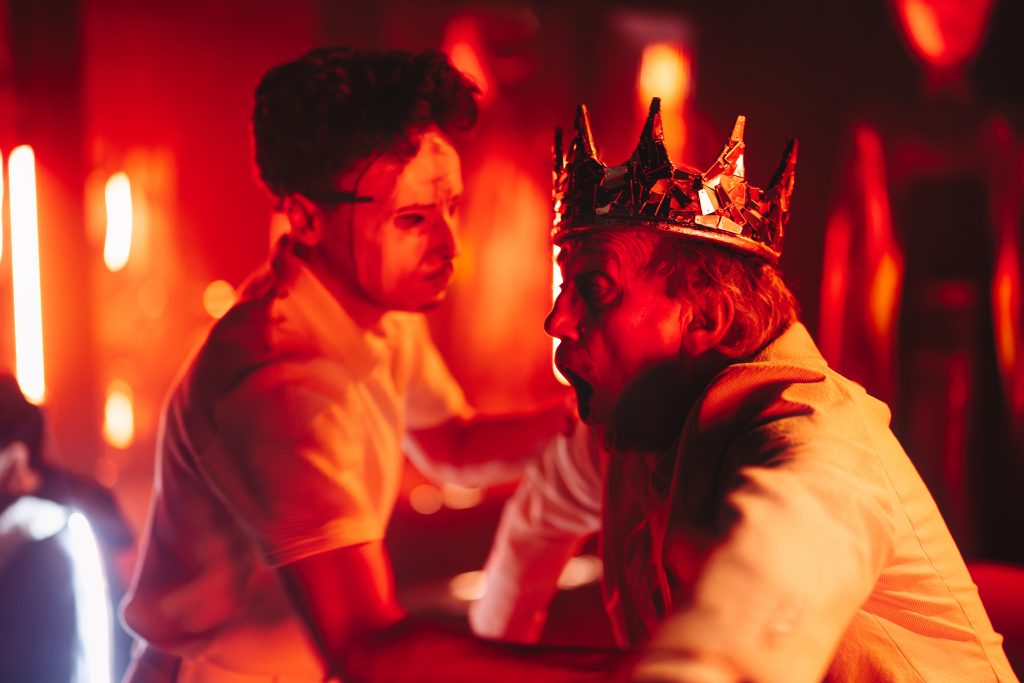
In a season guided by courage, neither the superstitions around the play nor the assumption that the text is universally known can really scare you. And the interest in exploring Shakespeare through the lens of VR goggles surpasses any fear(…) In the Militari matrix, truth becomes increasingly fragile in the face of an imperceptible tyranny. Macbeth (Voicu Aaniței) doesn’t kill Duncan (Sorin Dinculescu) and doesn’t betray out of thirst for power or madness, but because he has no choice (…)
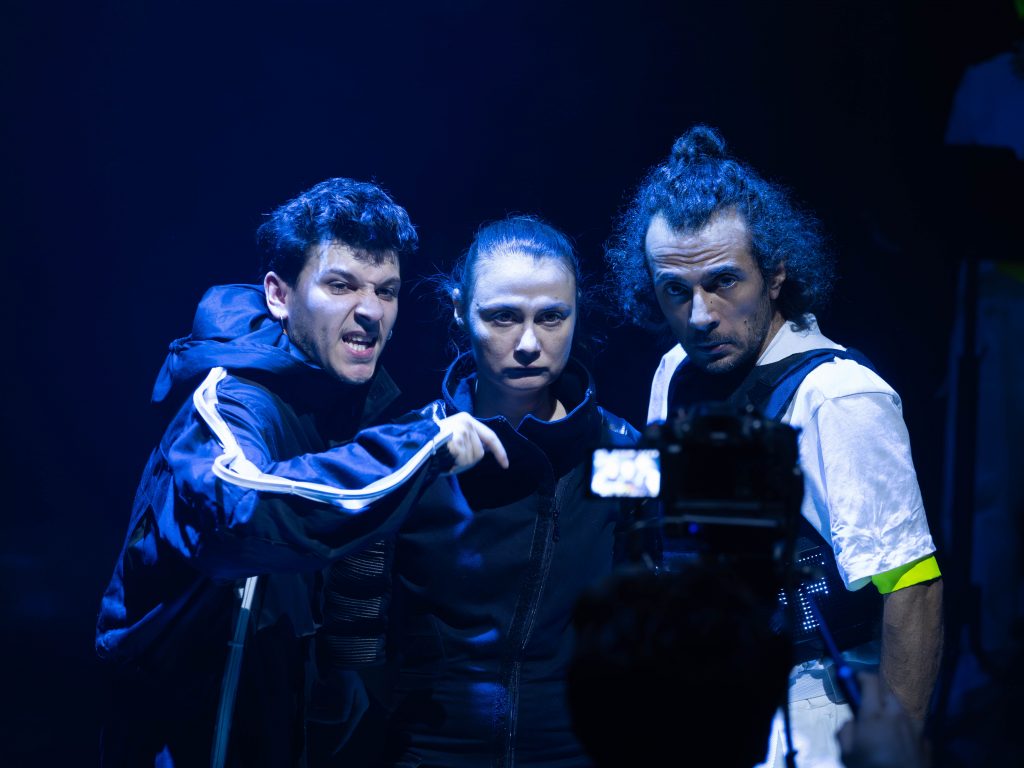
No action or line goes unnoticed; the spotlight is always on the characters, and the SS camera (here the show Starea Scoției, a referential irony to the other SS) never lets individuals out of its sight, also functioning as a propaganda tool. (Ana Leu, Free will: not detected – Macbeth.0)
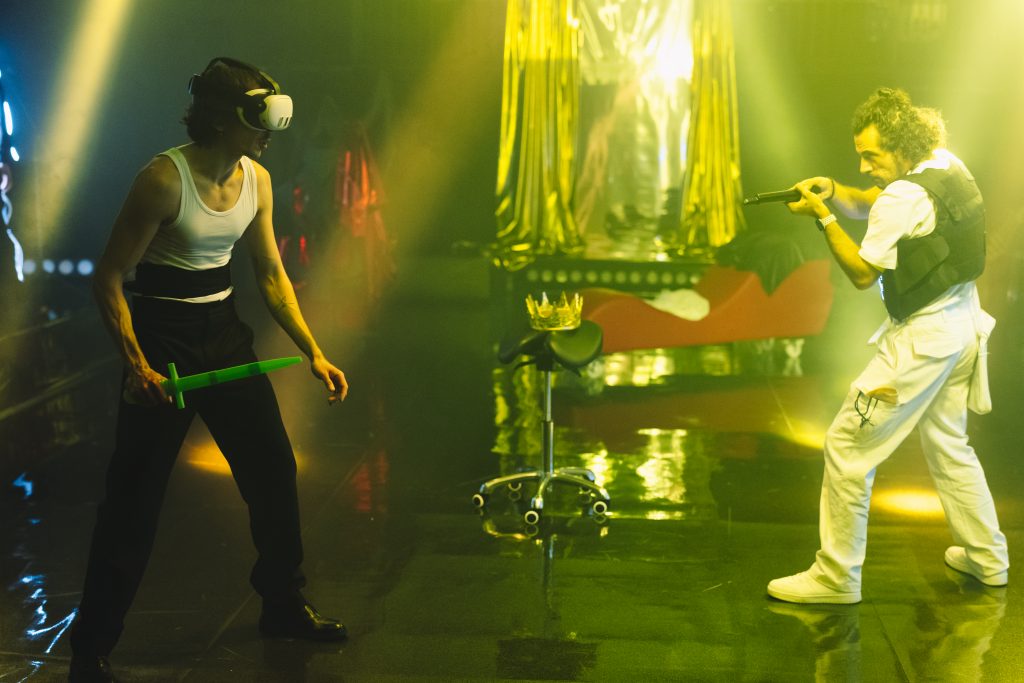
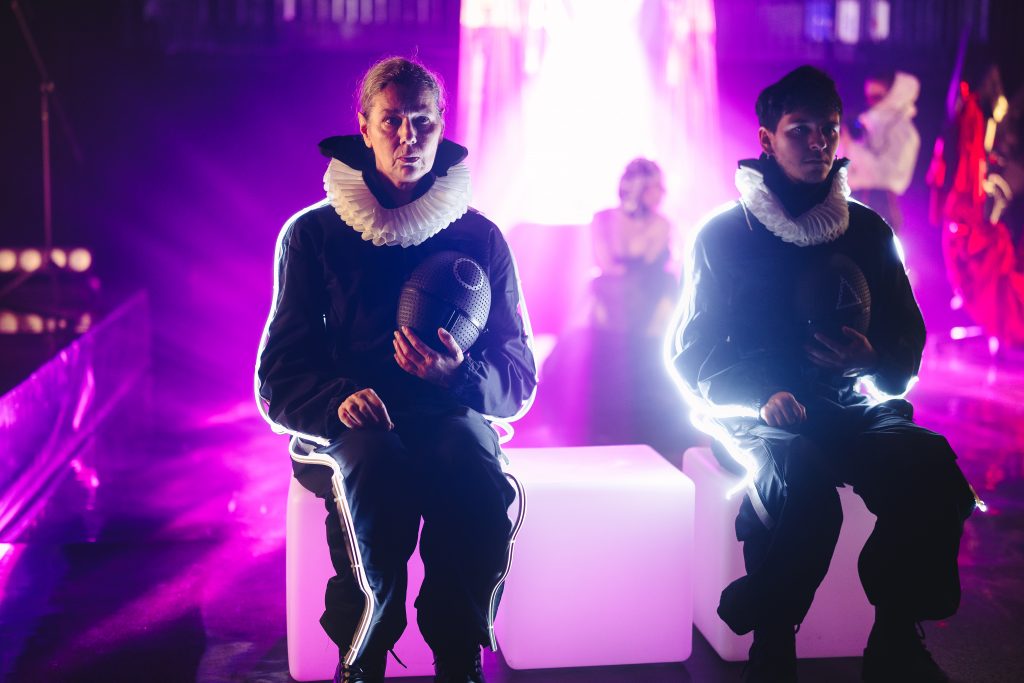
How is it possible? Director Catinca Draganescu and her team have made “Macbeth.0” not just a theatre performance, but also a video game simulation. The protagonists are no longer just characters: they are avatars, electronic adventure heroes, with specific attributes, parameters, skills, weapons, missions to complete.
And, as in any game, there are bugs. Only here you can blame them on the playwright. There are opponents that “spawn,” as any player annoyed by their ability to multiply pointlessly would say. And any action by a character becomes part of a script written by a coding specialist. (To be precise, the show’s “code” is written by Catinca, because she adapted Shakespeare’s text to the needs of this version) . (Diana Popescu)
Macbeth, turned by director Catinca Drăgănescu into a metronome, sets the play’s ideological clock in motion. The main character appears changed, alien, and confused. He is immersed (you might say) in his own thoughts, yet also completely devoid of free will; a hybrid, to say the least, strange. The protagonist is taken out of the usual setups and implemented into an RPG (Role-Playing Game)—not the Skyrim or The Witcher type, as you might expect, but one closer to Cyberpunk 2077 (set design by Gabi Albu, costumes by Rodica Neacșea, VR by Ciprian Făcăeru (Augmented Space Agency), lighting design by Andrei Ignat, video design by Dan Ionescu). At the same time, he is abandoned to the whims of a ruthless, unscrupulous kismet, concerned only with satisfying its appetite for mischief. Macbeth (Voicu Aaniței) plays his role, but we cannot ignore the frame narrative, in which we are participants. First, there are the witches who manipulate the hero’s fate: the first story. And then, us, watching as he tries to convince us that we are not living (though we are) the same Macbeth, but in a gentler version, every day: the frame . (Roman Radu, Anatomy of imposture – Macbeth.0)